Dominican Night
[vc_row][vc_column][vc_video link=”https://youtu.be/XWAbauWFlmc?si=ZEl3lant6HcRRPVl”][/vc_column][/vc_row]
Tags: High School, Middle School, student life[vc_row][vc_column][vc_video link=”https://youtu.be/XWAbauWFlmc?si=ZEl3lant6HcRRPVl”][/vc_column][/vc_row]
Tags: High School, Middle School, student life[vc_row height=”auto” css=”%7B%22default%22%3A%7B%22margin-top%22%3A%22-40px%22%7D%7D”][vc_column][vc_column_text]A delegation of Ashton students participated in the Harvard National Speech and Debate Tournament-Public Forum Debate Competition.
They prepared to debate on the topic: The United States federal government should ban single-use plastics. Our teams were registered as Junior Varsity, debating 6 rounds during the weekend. It was a very challenging experience, where only 12% of the participants pass to the quarter finals.
Forensics (speech & debate) offers a unique and rewarding mix of academic and extracurricular opportunities that provide a wide range of benefits to students, whether they learn the basics and are occasional competitors or become experts in an event and compete in a tournament. No matter their level of involvement and commitment, there is a format of debate beneficial for every student. Students who participate in speech & debate learn a variety of skills that are directly transferable to a wide range of academic and real-world situations. For starters, all formats of speech & debate teach the vital skill of public speaking, useful to a student for the confidence to speak up to answer a question or in making a presentation in front of a class, or later in life as a professional who has a busy slate of meetings, press releases and pitches.
Debater students met every week for one hour or two hours. Sometimes our students find themselves being overwhelmed with school work and extracurricular activities (clubs, sports, etc.) To be part of the debate program requires discipline, debate is an extremely rigorous activity, demanding near-endless amounts of time and energy from its participants. Our debate coaches are Leyti De Los Santos, Alexia Pimentel, María José Brea, and Laura Vásquez.
“My Harvard experience was pretty good! I knew it would be a challenge yet my partner and I tried our best. It was interesting to see how different every judge is and how you have to adapt to their likings. Along with the learning I gained from the debate, I also appreciate the international friends I made throughout the debates.” -María Andrea Herrera
[/vc_column_text][/vc_column][/vc_row][vc_row height=”small”][vc_column][us_image_slider ids=”41469,41483,41481,41480,41479,41478,41477,41476,41474,41473,41472,41471,41470,41468,41467,41463,41462,41461″ nav=”thumbs” fullscreen=”1″][/vc_column][/vc_row]
Tags: debate, High School, School Leadership, student life, Weekly News[vc_row][vc_column][vc_column_text]This past winter a group of University of Southern Florida (USF) students, led by Alumni Robert Sang, approached the Ashton school with an opportunity. The group of students were part of Engineering Without Borders and had a problem. A multi-year project had been put on pause during the pandemic and it was their job to bring it back to life. The big issue? The students were not allowed to travel due to both Visa and University restrictions. So the group of students based and stuck in Florida were now in charge of a project already established in both Bolivia and Miches, Dominican Republic. Robert Sang had an idea.
Enter Ashton school. Robert Sang presented his alma mater with the chance for a partnership. The USF students could teach and coach the Ashton students on how to perform real life Engineering practice while working with rainwater catchment systems. An immediate connection was made with the 9th grade Earth Science class who was already discussing water and the various ways it impacts and is impacted by earth and humans. A partnership was formed and the 9th graders would go on to learn from and work with these University students.
[/vc_column_text][us_grid post_type=”attachment” images=”35664,35665,35662,35663,35666,35668″ items_quantity=”6″ items_layout=”gallery_default” items_valign=”1″ columns=”3″][vc_column_text]The weeks leading up to the trip included video calls with the University students and many many many emails between the project coordinators as they problem solved on the fly. The earth science class got to see first hand what the Engineering students do in everyday life. They were able to not only get training, but also ask questions about university and life as an engineering student. As the trips arrived students were prepped to test water, engage with the community, and report back the data which will be used to gauge the performance of these rain water catchment systems.
[/vc_column_text][us_grid post_type=”attachment” images=”35684,35683,35682,35681,35680,35679″ items_layout=”gallery_default” items_valign=”1″ columns=”3″][vc_column_text]
The highlight of the project was the Miches Trip itself. The students were broken up into two trips. First the A section, then the B section. Both groups gathered water from each of the 5 rain water catchment systems. (The 6th system had been disassembled as the roof was going to be replaced.) This water pulled from each tinaco was then brought back to the lab where tests were done to determine bacteria and metal levels as well as pH. In the trip, Ashton Students engaged community members with surveys to get a better understanding of how they obtain water, how well the systems are working, and various other helpful information. Instruction manuals and maintenance logs were also shared by students with owners of the homes where the Water catchment systems were located. Locations for new future rain water catchment systems was also made by students as they walked around the community And to conclude the trip, students shared sodas with the community members who were able to be present.
[/vc_column_text][/vc_column][/vc_row][vc_row][vc_column][vc_column_text]
[/vc_column_text][us_grid post_type=”attachment” images=”35678,35677,35676,35675,35674,35673,35672,35671,35670″ items_layout=”gallery_default” items_valign=”1″ columns=”3″][/vc_column][/vc_row][vc_row][vc_column][vc_column_text]
[/vc_column_text][/vc_column][/vc_row]
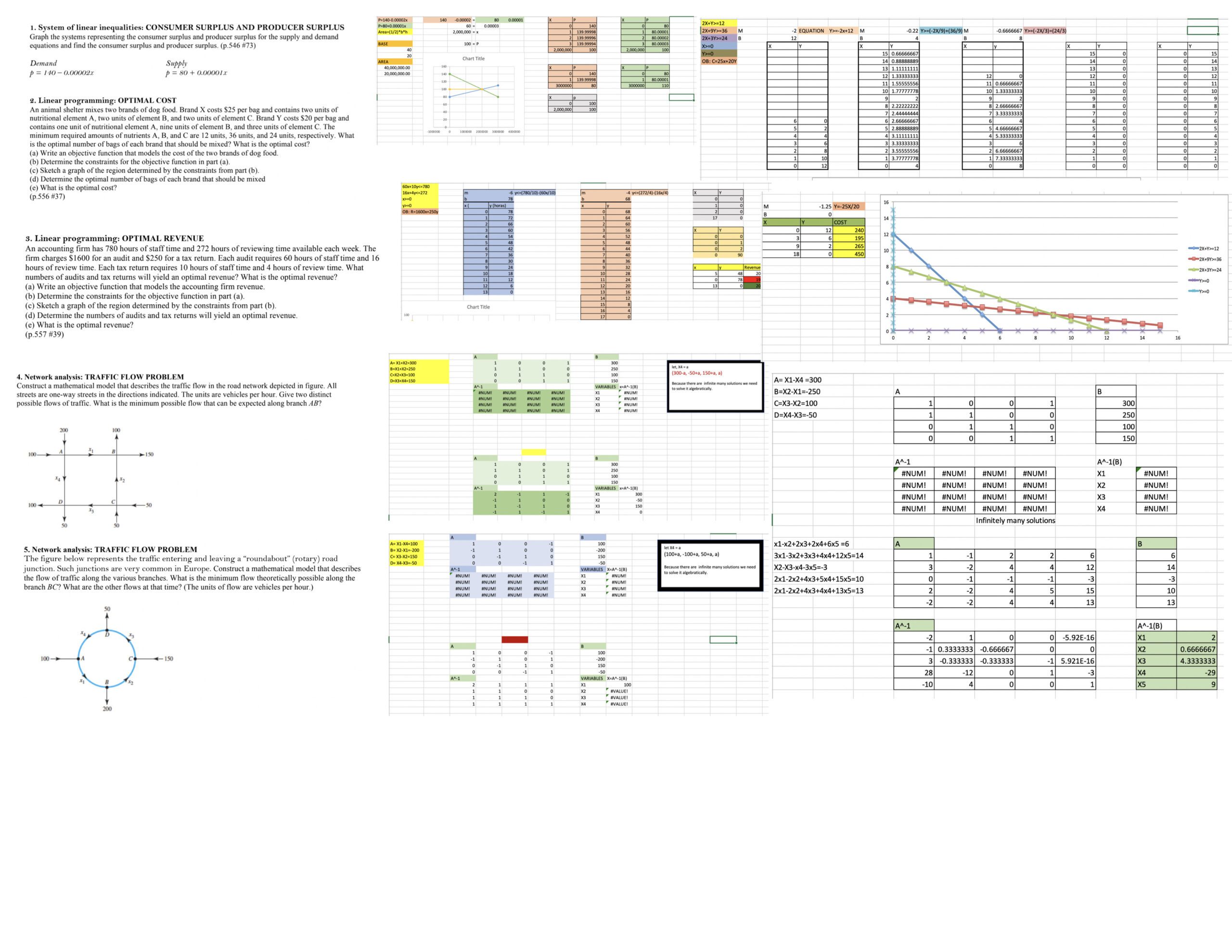
Tags: Community service, Deeper Learning, Expeditionary Learning, High SchoolOur 12th grade Math Honors students are able to construct a mathematical model using systems of equations, systems of inequalities and matrices to solve these application problems algebraically. Afterwards they apply technology, in particular, Microsoft Excel to create formulas and functions to confirm their solutions.
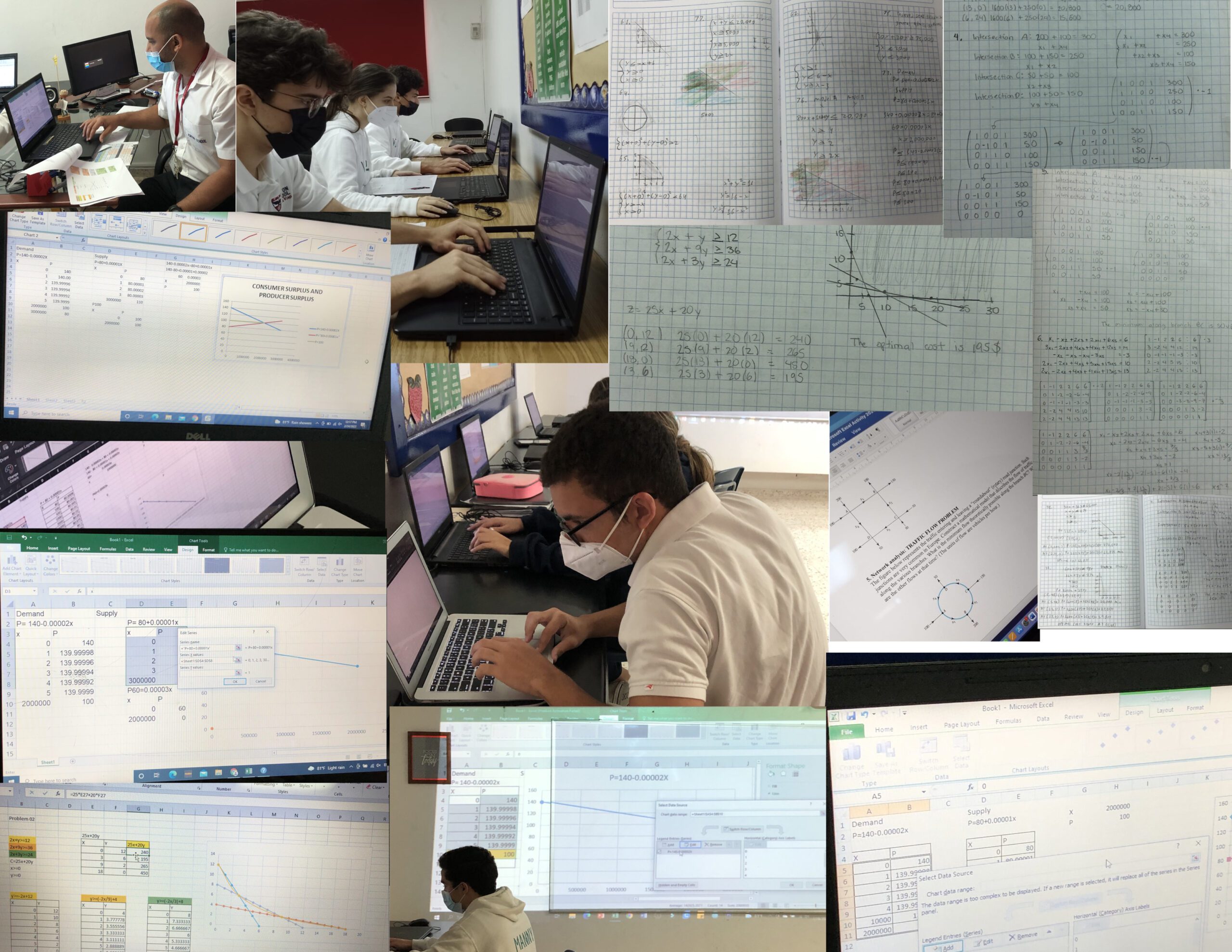 Many applications in business and economics involve a process called optimization, in which you are asked to find the minimum or maximum value of a quantity. In a free market, the demands for many products are related to the prices of the products. As the prices decrease, the demands by consumers increase and the amounts that producers are able or willing to supply decrease. These two related concepts economists call consumer surplus and producer surplus.
Network analysis, Kirchhoff’s point and loop rules plays an important role in electrical engineering. In recent years, the concepts and tools of network analysis have been found to be useful in many other fields, such as information theory and the study of transportation systems. The following analysis of traffic flow through a road network during the peak period illustrates how systems of linear equations with many solutions can arise in practice.
Estimados padres:
Si se unieron a las reuniones que llamamos Town Hall en octubre pasado, donde presentamos nuestro Mapa Estratégico a tres años, podrán recordar que una de las Iniciativas Estratégicas de Aprendizaje más Profundo es incorporar “Aprendizaje a través de Pasantías” (LTI) en nuestros grados superiores. Este proceso evolucionará durante los próximos tres años, y el primer paso para el año escolar actual es comenzar a hacer conexiones y construir relaciones con empresas y organizaciones que se asociarían con nosotros en este valioso proyecto para nuestros estudiantes.
En el corazón de la iniciativa LTI está el hallazgo comprobado por investigaciones de que los estudiantes aprenden mejor cuando sus experiencias de aprendizaje son más significativas y se les permite tener una participación activa en el proceso educativo. Esto es particularmente poderoso cuando el aprendizaje en el aula se puede combinar con experiencias del mundo real. Esto respalda uno de nuestros Principios Rectores recientemente revisados, el que aboga por que los estudiantes trabajen hacia el Dominio del Conocimiento y las Habilidades, mediante el cual los estudiantes no solo están adquiriendo, sino aplicando conocimientos para resolver desafíos del mundo real.
Bajo este marco, que comenzará a entrar en vigencia el próximo año escolar, los estudiantes de décimo en adelante estarán en el campus durante la mayor parte del ciclo y algunos días recibirán el aprendizaje mediante la experiencia en un entorno del mundo real. Cada estudiante tendrá un plan individualizado, basado en sus posibles intereses profesionales, y los estándares curriculares se integrarán en este plan. El plan se desarrollará en conjunto con el maestro titular del estudiante, nuestras orientadoras, la directora y los padres.
Los estudiantes recibirán crédito por su trabajo fuera del campus, ya que los estándares de sus materias básicas se reflejarán en el trabajo que realicen. Habrá dos “Días de Exhibición del Aprendizaje a través de Pasantías” donde los estudiantes presentarán el trabajo que están realizando y cómo se integra con nuestros Principios Rectores.
Nos comunicamos con ustedes al iniciar este proceso, no solo para informarles y entusiasmarles, sino también para brindarles la oportunidad de asociarse con nosotros para apoyar las pasantías de Ashton en la comunidad. Si es propietario o tiene relaciones con empresas o cree que su lugar de trabajo puede ser ideal para esta iniciativa educativa progresiva, comuníquese con Ms. Gygax (headofschool@tas.edu.do) o Ms. Torres (principal_ug@tas.edu.do), para que podamos comunicarnos con la persona adecuada y cursar este proyecto.
Estamos entusiasmados con la forma en que esta experiencia de aprendizaje enriquecerá la educación de sus hijos hoy y en la preparación para la vida más allá de la escuela secundaria. ¡Únase a nosotros una vez más mientras trabajamos juntos para inspirar y transformar!
¡Que tengan una muy feliz Navidad y entrada de año nuevo!
Bendiciones
Ms. Gygax & Ms. Torres
Tags: High School, Internships, Weekly News[vc_row][vc_column][vc_video link=”https://youtu.be/KmmbqUSrFWc”][/vc_column][/vc_row][vc_row height=”medium”][vc_column][vc_column_text]
The Student Council for the school year 2021-2022 was formally presented after Monday’s Induction Ceremony.
Mr. Gavilan, as Dean of Students headed the ceremony, opening with these words:
“STUCO, you are here because you have met the academic and character requirements and also because you count on the support of your teachers and Academic Council to occupy your corresponding positions from now on. It is a great honor for you to do so and we all feel very proud of you. Congratulations!
Just remember that the reason why one is chosen to be a leader is because that person has not only the necessary knowledge and skills, but also the heart to actively and empathetically listen to others, to try to feel their necessities in his own skin, to offer guidance and feedback, and to take preventive and reactive actions when needed. Being a leader equals being a servant. Don’t forget that.
Today you are inducted as Student Council of Ashton School in this 2021 – 2022 school year, precisely at a very particular stage of human history. I hope that the learning you have gained throughout these pandemic times contributes to shape the course of your actions with a balance of diligence, understanding and sensitivity. On my part, I commit myself to give you the necessary support you need as leaders and as individuals. For that, I ask for wisdom to the Lord. STUCO, once again, congratulations!”[/vc_column_text][/vc_column][/vc_row]
Tags: High School, Leadership, Stuco, Student Council2020… a pretty tough and difficult year for all us. Murders, elections, protests, natural disasters, explosions and on top of everything a pandemic. Because of all that was mentioned before, we had to get used to new ideas, for many of us our life did had a 360 degree spin. Online school started, it was a challenge but, at the end of the day it was just another rock we got to move all together that was blocking our road, sad times because we couldn’t see our friends and families, the 6 feet apart deal, masks, the death toll, no gatherings, economy failing. My idea today is not to mention what everyone is used to mentioning… the dark side of the story, instead, the brighter one.
2020 has been a teacher, an eye opener for many of us, new opportunities, lifestyles, beliefs. Thanks to this year, I’ve become a more thankful girl. I appreciate everyday things that we took for granted, since we thought they were here for us forever… for example; that rush of excitement of the first day of school, being in a class physically with our friends and teachers, that big smile in our faces when our directors waved us in the morning, getting ready to go out, lunches with my relatives, apart from all those cases, we should mostly be thankful for the TIME we have. Add to that, I thank God for giving me the blessing to have a roof, water, food on the table, education, AC, and a bed. Finally and most importantly, my health, this is all that really matters, and I’m so grateful that my family, friends, loved ones, teachers and myself are all alive and healthy. I can’t even get myself to think how devastated some may feel since so many have lost relatives and people they loved. I take this opportunity to say how sad I am for anyone who already went through this.
During the Christmas holiday I reflected on the importance we give to many material things, I think 2020 proved ourselves that at the end much of it is not necessary. As my teacher, Mr. Edwin (Character ED.) asked us: “if this was your last Christmas what would you give to the 3 most important people in your life?” Please reflect on that, I’m pretty sure you are not going to mention the last PS5, or the new Louis Vuitton Bag, but instead maybe a trip around the world, more gatherings, good health, and behind those wishes, there is a common theme: time. I really mean it, enjoy those little times you have, be thankful, go and tell that person you love that you are extremely glad they are here with you. The gift of time, give time, make time.
This new year will be brighter as we walk holding God’s hand, things will get better, but, you also need to be part of it… set yourself new goals, and ideas. Stop accusing 2020 of being the worst year of your life and instead say; “yes, 2020 was pretty tough and was filled with an unexpected series of events, but it taught me one of the most important lessons of my life, don’t take those things for granted, be grateful, make the best out of your life, and each day you wake up, thank God for your health and for allowing you to live a new day in this world”.
My dear Ashton Community, my hope is that we are going to be reunited soon, in the meantime keep reflecting on what we learned from 2020, take care of yourself, and be with your loved ones, as long as you can!!!
2020, an unexpected series of events but with a powerful message!
-Maria Jose Caminero 10thA
Tags: 2020, Athletics, Elementary, High School, Middle School, News, Student Briefing
[vc_row][vc_column][vc_column_text]Next Tuesday we will be concluding the 2nd Cycle of orientation, reviews and social-emotional interventions and be ready to officially begin new content for the 2020-2021 school year. These first days were also intended to evaluate how the students are responding to the eLearning modality and to implement new online platforms as deemed necessary.
The design of the eLearning plan comes after months of conducting research and studies into best practices for online learning, and considering the feedback from teachers, students and parents as to how the students are engaging with and reacting to distance learning modalities. We have also been ensuring that teachers have the resources to create quality lesson plans and carry out instruction in this new fashion.[/vc_column_text][/vc_column][/vc_row][vc_row][vc_column][vc_column_text]
Last spring, when we found ourselves having to implement emergency distance learning, the Middle and High School eLearning platform consisted fully of synchronous encounters where students connected live with their teachers for the entire school day. Our goal was to provide students with a certain sense of “normalcy” during a potentially emotionally challenging time. Students knew that despite the crisis that was quickly unfolding, they could find their teachers in the same place and same time every day. Our full-day synchronous connections did serve its purpose. However, we knew full well that research shows that a longer term distance learning plan would have to include a balance of both synchronous and asynchronous teaching and learning.
During the synchronous encounters, which will still be the primary format, students are able to not only engage directly with their teacher, but with their classmates as well. However, we must also be careful to not overload students with screen time. Asynchronous encounters also allow for more self-directed and self-paced learning. Students also benefit from the experience of exploring on their own and even being able to connect at different times of the day when they are more rested from the synchronous screen time. Nonetheless, even when our schedule calls for asynchronous learning, teachers will be available to connect if a student needs additional guidance. Below is the revised general format for the Secondary School schedule. Your child’s detailed schedule with the specific subjects per day is found in the Classroom Site.
[/vc_column_text][/vc_column][/vc_row][vc_row][vc_column][vc_column_text]
| Monday | Tuesday | Wednesday | Thursday | Friday | |
| 8:00-10:15 | Live synchronous teaching and learning | Live synchronous teaching and learning | Live synchronous teaching and learning | Live synchronous teaching and learning | 8:00-9:00
Asynchronous learning |
| 10:15-10:30 | Break | Break | Break | Break | 9:00-10:00
Live synchronous teaching and learning, if the student wishes to connect. |
| 10:30-12:00 | Live synchronous teaching and learning | Live synchronous teaching and learning | Live synchronous teaching and learning | Live synchronous teaching and learning | 10:00-12:00
Asynchronous learning |
| 12:00-1:25 | Lunch | Lunch | Lunch | Lunch | |
| 1:25-2:55 | Asynchronous learning with teacher available to connect with students as needed | Asynchronous learning with teacher available to connect with students as needed | Asynchronous learning with teacher available to connect with students as needed | Asynchronous learning with teacher available to connect with students as needed | 12:00-1:25 Lunch |
| 1:25-2:55
Asynchronous learning |
[/vc_column_text][/vc_column][/vc_row][vc_row][vc_column][vc_column_text]
[/vc_column_text][/vc_column][/vc_row][vc_row][vc_column][vc_column_text]
Google Sites will continue to be the platform to access all of our eLearning classrooms. Please do not share the link to our eLearning platform with anyone other than your child.
While we wanted to start with the same video conference platform that was familiar to students and parents (Google Meet) we also left the door open to the possibility of incorporating another platform such as Zoom. As of this 2nd Cycle, teachers have been communicating with you about making this very easy transition. The Advisory teacher will create the “one link” connection and all subject teachers will connect through that link. This eliminates the need to connect to different links for different subjects. Teachers will protect entry into the eLearning classrooms by creating waiting rooms and only allowing entry to their students. If your child will be connecting from a device that is not clearly identified with his/her or your names, please inform your child’s Advisory teacher in advance. Otherwise, the teacher will not know to give your child entry. Please understand that in order to ensure the protection of your child’s identity, this is a necessary measure.
Google Classroom will be the primary resource for the creation of assignments, providing feedback and for students to send their work to their teachers.
Further down the road when your child’s teachers begin to provide feedback from assessments, you will be able to monitor your child’s progress through RenWeb/FACTS, our student information system. Parent training for Secondary School grades will take place on the dates shown below. Feel free to sign up for one of these sessions by clicking on the day and time that you prefer.[/vc_column_text][/vc_column][/vc_row][vc_row][vc_column][us_grid][/vc_column][/vc_row][vc_row][vc_column][vc_column_text]
Students have learned the importance of following certain procedures during distance learning. Please review these agreements with your child and help him/her to follow the classroom netiquette. As of the 3rd Cycle, we would like to see students using a school uniform top. It may be his/her regular or sports uniform. Please make sure that your child is always using full and appropriate attire .
Making sure that your child has a comfortable and appropriate place to engage in learning is essential. The 8:00 a.m. start should allow your adolescent to get a little more sleep, but please make sure that he/she is connected promptly at 8:00 a.m. If you need to be out of the house, inform the adult in the home to not interrupt the student during school hours. Likewise, if you need to speak to the teacher, please make an appointment. Remember that walking into an eLearning classroom while instruction is taking place is like walking into the physical classrooms at school without prior notification. These interruptions are not allowed.
During the next several weeks, we will continue to inform our school community about upcoming workshops, webinars and resources that will be made available to parents to support you during these challenging times. This includes support from the Parents’ Association (ASPAS) as they put together online resources for parents and students. Events and dates will be announced as they become available.
We hope this has given you clear guidance as we prepare to launch the 2020-2021 school year, full steam ahead. Please know that we will continue to do our best to help you through these challenging times. We also count on your customary support to work as a team so that the students, parents, and teachers will be able to stay physically and emotionally resilient as we navigate these uncharted waters.
May God bless you and Ashton School mightily.
.[/vc_column_text][/vc_column][/vc_row]
Tags: COVID, eLearning, High School, Middle School, Quarantine[vc_row][vc_column][vc_column_text]Last February, 11 students from 11th and 12th grades were participating in the AMM (American Math Competition) at Colegio Bilingue New Horizons. The American Mathematics Competitions are a series of examinations and curriculum materials that build problem-solving skills and mathematical knowledge in middle and high school students.
We have received the summary statistics for our school with the following results:
I consider this an achievement for both the school and the students, and suggest it be shared with the community (newsletter, Back to School Night). It is a good opportunity to motivative other students and recognize the effort of these two students.
[/vc_column_text][/vc_column][/vc_row]
Tags: American Math Competition, High School, Math, Middle School, student life[vc_row][vc_column width=”2/3″][vc_column_text]El pasado miércoles 22 de julio las delegadas se dieron cita con las directoras del colegio en una reunión virtual para conversar de las inquietudes de cara al inicio del año escolar 2020-2021. Se revisaron las diapositivas que pueden encontrar aquí seguidas de una sesión de preguntas que resumimos más abajo.
Ms. Gygax reiteró lo comunicado al finalizar el año escolar 2019-2020 en el documento llamado “Trusting and Planning Forward” que es la guía de reintegro elaborada por el comité de emergencia tomando en consideración el trabajo de los subcomités que lo conforman. En ese documento se tomaron en consideración los pareceres de la comunidad estudiantil y de padres. Recordamos que esta guía se planteó a inicios de verano como una primera versión. En ese momento y a la fecha nos mantenemos enfocados trabajando para recibir a todos los estudiantes de Pre-Kinder a 6to grado presencialmente en agosto, y los alumnos de 7mo a 12mo bajo una modalidad combinando la educación a distancia y la presencial, siempre que las directrices del Ministerio de Salud y de Educación así lo permitan.
Nuestras aulas e instalaciones han sido intervenidas para hacer esto posible, redistribuyendo el número de alumnos por aulas y separando areas de modo que cada grupo de alumnos se mantenga segregado y se evite el intercambio entre grupos de diferentes grados.
Para lograr esto, el colegio ha invertido en la adquisicion de materiales, insumos y equipos para la nueva normalidad. Asi como para desinfección de areas bajo nuevos protocolos para poder proveer aulas desde donde se puedan transmitir clases de alta calidad de imagen y sonido. Instalacion de cámaras para los grados que tendrán la modalidad híbrida (virtual mitad del ciclo y presencial la otra mitad), mantener la nómina actual de profesores y todos los empleados garantizando su empleo en momentos de solidaridad y nuevos gastos de recursos humanos en personal de tecnologia (la nomina y gastos de recursos humanos representan casi el 70% del presupuesto escolar).
Inversiones que se han hecho para dar cumplimiento a los nuevos protocolos pudieran compensar cualquier ahorro generado en otras areas. Ahorros potenciales igualmente se compensan con beneficios extendidos como fijar la taza cambiaria en el momento de matriculación asi como los que pagaron con una tasa menor ya que actualmente se ha experimentado una alza que afecta nuestros gastos en dólares. El grado de compensación y ahorro, si lo hubiera, solo lo sabremos realmente al final del año escolar cuando hayamos ejecutado dicho presupuesto y se pueda hacer esa evaluación.
Es importante destacar que el cuerpo de docentes se ha entrenado en este tiempo para poder brindar el programa académico. Nuestros profesores han estado capacitándose con el Google Classroom Certification, Global Online Academy y un curso en sobre el aprendizaje/enseñanza a distancia para docentes de escuela primaria, media y secundaria. En la reunión pudimos ver incluso las sesiones de trabajo donde los docentes han tocado temas que van desde mantener el enfoque, la motivación, enriquecer contenido, etc. de la instrucción a distancia. Estamos confiados en que lo que estaremos viendo como clases a distancia, para los grados o familias que así lo requieran, sería una instrucción de alta calidad y contenido.
Igualmente, en estos meses se ha dado conclusión de la configuración del “Parents’ Web” de Renweb/FACTS de modo que el seguimiento a las clases y comunicación con los profesores será también mejor.
Nuestro compromiso es brindarles la mejor instrucción a sus hijos. Hemos mantenido nuestros estándares y si algo ha hecho la pandemia es resaltar aquellas prácticas que debemos aquilatar, valorar y proteger bajo cualquier modalidad de instrucción. Estamos en tiempos que nos retan y desafían como profesionales de la educación, pero contamos con un valioso recurso humano en nuestro cuerpo docente, con familias responsables, entendidas y con capacidad para responder a los retos que tenemos por delante y sobre todo con la guianza de Dios a quien acudimos continuamente en busca de dirección y sabiduría.
Agradecemos el que también nos hayan retroalimentado y ayudado en este etapa del “puente” en tantas formas. Estamos en la antesala del “Nuevo Normal”, les pedimos paciencia para esperar las directrices de las autoridades quienes la semana próxima han dicho que emitirán declaraciones relacionadas con el próximo año escolar. Les recordamos que hasta nuevo aviso, las siguientes fechas se mantienen pues se refieren a encuentros virtuales:
19 de agosto: Reunión de orientación virtual para nuevas familias
20 de agosto: Noche virtual de regreso a la escuela
21 de agosto: reunión virtual personalizada para saludar y conocer los profesores titulares de sus hijos. Las citas para esta reunión se harán de forma similar a la formato de las conferencias de entrega de notas.
24 de agosto: primer día de clases, presenciales y virtuales, según los grados. Reiteramos el inicio de clases presenciales depende de lo que comuniquen las autoridades.[/vc_column_text][us_separator show_line=”1″][/vc_column][vc_column width=”1/3″][vc_column_text]Estas son las imágenes de las diapositivas compartidas por Ms. Gygax en la reunión de delegadas del mes de julio, 2020:
[/vc_column_text][us_grid post_type=”attachment” images=”26668,26669,26670,26671,26672,26673″ orderby=”post__in” columns=”1″ img_size=”full”][us_separator show_line=”1″][/vc_column][/vc_row][vc_row][vc_column][vc_column_text]
A la fecha, 29 de julio de 2020, las autoridades aún no han establecido una modalidad a la cual debemos adherirnos, esperamos recibir noticias la semana próxima conforme el nuevo ministro ha indicado que se pronunciará al repecto. Nuestro documento guía contempla que los alumnos de PK-6to se reintegren presencialmente y los alumnos de 7mo a 12mo asistan 3 días presencial y 3 días virtual. Para estos alumnos, la modalidad híbrida conlleva un ajuste de las materias y horarios manejable que permitirá aprovechar los beneficios que se pudieron tener en formato virtual sin dejar de tener los beneficios de encontrarse física y socialmente presentes en el plantel.
AINEP ha publicado la siguiente declaración al respecto:[/vc_column_text][us_image image=”27302″ size=”us_600_600_crop” onclick=”lightbox”][vc_column_text]
Sí, entedemos que hay familias que a pesar de tener la posibilidad de la enseñanza presencial, van a optar por una acomodacion a la presencial. Para ellos se coordinará el seguimiento a distancia que variará considerablemente segun el grado del que estemos hablando. De todos modos, para poder reportar ante las autoridades educativas la escolaridad de un alumno, es necesario el cumplimiento riguroso del programa académico.
Comentario adicional: En Secundaria se está implementando el uso de cámaras en las aulas ya que los profesores estarán impartiendo la instrucción desde el salón de clases en horario sincronizado, esto así porque desde el inicio se establece un arranque de clases con un componente a distancia. Para la primaria hemos invertido para hacer del plantel un lugar lo mas seguro posible donde puedan asistir presencialmente, haciendo espacios de uso exclusivo para los grupos y con el mínimo intercambio en las instalaciones.
En Primaria se le está buscando la forma de que los alumnos reciban la instrucción, pero haciendo acomodación a las condiciones de la familia. Entendemos que luego de recibir resultados de la encuesta podremos dar mas detalles operativos de cómo luciría la modalidad de educación a distancia en estos grados.
A fin de mantener el plantel lo más controlado posible, el acceso al mismo se limitará exclusivamente al personal del colegio y a los alumnos. Los padres y personal de apoyo familiar, en seguimiento a los protocolos de la covidianidad, se mantienen fuera del plantel. Se está diseñando la entrada al plantel de modo que utilicemos más de una entrada y posiblemente diferir la entrada de prescolar a las 8:00 a.m.
El propósito de segregar grupos es poder rastrear posibles cruces de contagio. La Dra. ha recibido entrenamiento del Johns Hopkins en la materia de rastreo y nos está asistiendo en el diseño de los pasos a seguir. Cada caso se tratará según se presente. Entendemos que procederá la llamada para el retiro del estudiante que presente síntomas estando en el colegio manteniéndose con la modalidad de educación a distancia hasta que su pediatra autorice el reintegro. Se habilitará un lugar próximo a la enfermería pero aislado del lugar donde van los alumnos a la enfermería a tratar asuntos no relacionados con COVID.
Hemos consultado múltiples fuentes sobre el contagio en edades infantiles que nos dan una perspectiva de confianza de que con el seguimiento a los protocolos de medidas de seguridad e higiene contínua podremos convivir con la realidad del COVID’19 en un marco escolar. Aquí los enlaces a dos de ellas, a modo informativo pues toda decisión que nuestro liderazgo toma debe considerar estudios y data que sean aplicables al tema:[/vc_column_text][/vc_column][/vc_row][vc_row][vc_column][us_grid taxonomy_category=”news” orderby=”modified” items_quantity=”3″ columns=”1″][vc_column_text]
Los párrafos de resumen de los artículos citados apuntan a que:
“A medida que muchos países comienzan a levantar algunas de las restricciones para contener la propagación de COVID-19, la falta de evidencia de transmisión en el entorno escolar permanece. Examinamos las notificaciones irlandesas de SARS-CoV2 en el entorno escolar antes del cierre de la escuela el 12 de marzo de 2020 e identificamos que no había transmisión pediátrica. Esto se suma a la evidencia actual de que los niños no parecen ser los impulsores de la transmisión, y argumentamos que la reapertura de las escuelas debe considerarse segura acompañada de ciertas medidas.” -Eurosurveillance
“Según la evidencia disponible, los niños no parecen estar en mayor riesgo de COVID-19 que los adultos. Mientras que algunos niños y bebés han estado enfermos con COVID-19, los adultos constituyen la mayoría de los casos conocidos hasta la fecha.” -CDC
[/vc_column_text][us_separator show_line=”1″][/vc_column][/vc_row][vc_row][vc_column][vc_column_text]
Esperando haber recogido en este documento el sentir e informaciones compartidas en el conversatorio de delegadas y liderazgo escolar, nuestras líneas de comunicación están abiertas para cualquier inquietud que puedan tener:
Ms. Gygax: headofschool@tas.edu.do
Ms. Resek: principal_lg@tas.edu.do
Ms. Torres: principal_ug@tas.edu.do
Ms. Viera: acoordinator@tas.edu.do
Atentamente nos reiteramos a sus órdenes,
Ashton School[/vc_column_text][/vc_column][/vc_row]
Tags: 2020-2021, COVID-19, Elementary, High School, Middle School, Preschool, Quarantine[vc_row][vc_column][vc_column_text]High School students completed the Elective projects for Semester 2 with the drafting of a short paragraph reflecting on the experience of cross-stitching and crocheting.
This proved to be a very useful tool to develop one essential virtue specially under current circumstances: PATIENCE!
This class was taught in Spanish this semester. Here the students thoughts:[/vc_column_text][/vc_column][/vc_row][vc_row][vc_column width=”2/3″][vc_column_text]”La clase de cross-stitch me pareció muy interesante, dinámica e independiente. Aprendí mucho, desde los puntos más básicos hasta puntos mayores y complejos. La clase me parece muy interactiva, hay una relación estudiante-profesor, relacion estudiante-estudiante de diferentes grados. Lo único que puede mejorar la clase, es darle mas tiempo, 55 minutos no son suficientes. Estoy muy agradecida de que Ms. Viera fuera nuestra profesora de esta materia💘🤩”[/vc_column_text][/vc_column][vc_column width=”1/3″][us_image image=”26548″ size=”medium”][/vc_column][/vc_row][vc_row][vc_column width=”1/4″][us_image image=”26547″ size=”medium” meta=”1″][/vc_column][vc_column width=”3/4″][vc_column_text css=”%7B%22default%22%3A%7B%22font-family%22%3A%22Lucida%20Sans%20Unicode%2C%20Lucida%20Grande%2C%20sans-serif%22%7D%7D”]”La clase de electiva de este semestre la verdad que fue genial. Yo no soy una persona muy creativa y tengo muy poca paciencia y Cross Stitching me ayudó mucho en eso. Para poder mejorar en muchas cosas hay que tomar riesgos y salir de nuestras zonas de comfort. Al escoger esta electiva la verdad que salí de mi zona de comfort pero todo valió la pena. Aprendí muchas cosas principalmente puntos básicos para luego poder desarrollar mis propios proyectos más adelante. Mi parte favorita fue al final cuando tuve que escribir me nombre porque no tenia el hilo totalmente adecuado y ya estábamos en cuarentena por eso fue un gran reto pero me salió mucho mejor de lo que esperaba. Creo que para una próxima ocasión sería mejor que como estudiantes compremos nuestro propio hilo y aguja porque si se presenta una situación donde no tenemos a nuestra profesora que nos provea esto, tengamos nuestros propios materiales. La verdad que Cross Stitching es un arte, te ayuda a practicar la paciencia y desarrollar tu creatividad. Le recomiendo esta electiva a cualquier persona. Les prometo que vale la pena.” – Laura Vásquez[/vc_column_text][/vc_column][/vc_row][vc_row][vc_column width=”2/3″][vc_column_text]”Cross stitching no era algo que tenía en mente aprender este año pero a último minuto decidí dar un rápido cambio de electiva. Esta fue indudablemente la mejor decisión que pude hacer ya que esta materia me enseñó sobre la paciencia y como la primera vez que intentes algo las cosas no te van a salir bien.” – Maria José Brea (9th grade)[/vc_column_text][/vc_column][vc_column width=”1/3″][us_image image=”26546″ size=”us_600_600_crop”][/vc_column][/vc_row][vc_row][vc_column width=”2/3″][vc_column_text]
“Al terminar la Electiva de Cross-Stich/Crochet, recordé que nunca es muy tarde para aprender algo nuevo. Gracias Miss por enseñarme algo con que distraerme y divertirme. Me encantó esta Electiva!” – Mia Peralta (10th grade)
[/vc_column_text][/vc_column][vc_column width=”1/3″][us_image image=”26545″ size=”us_600_600_crop”][/vc_column][/vc_row]
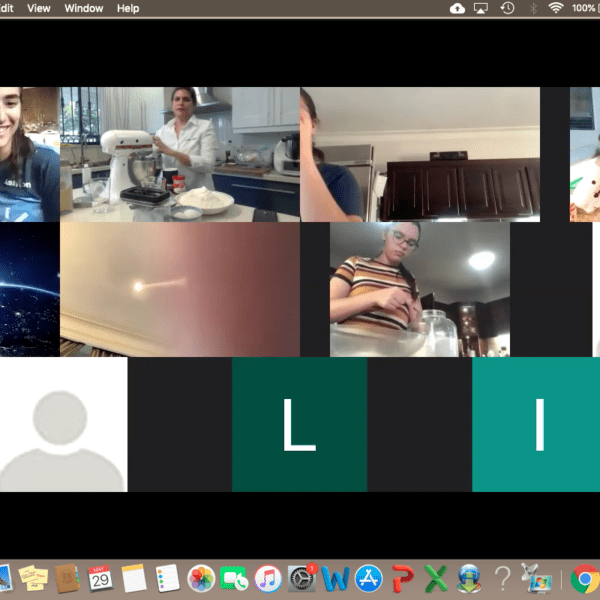
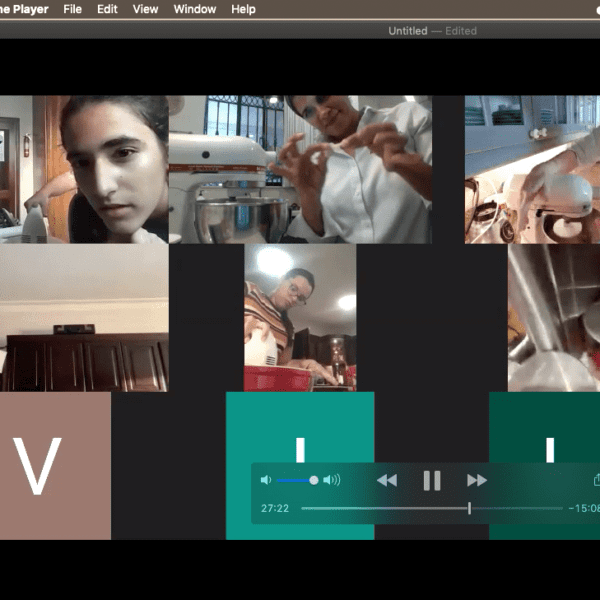
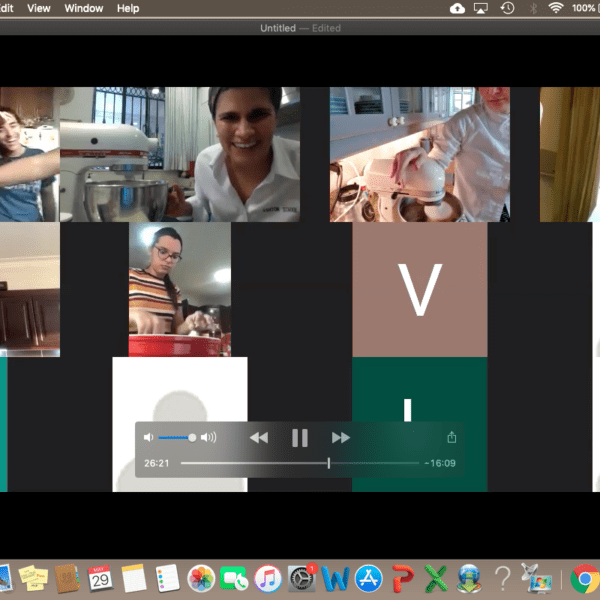
Tags: Crochet, Cross-stitch, electives, Fine Arts, High School, student life[vc_row][vc_column][vc_column_text]The quarantine challenged the cooking elective classes in High School:
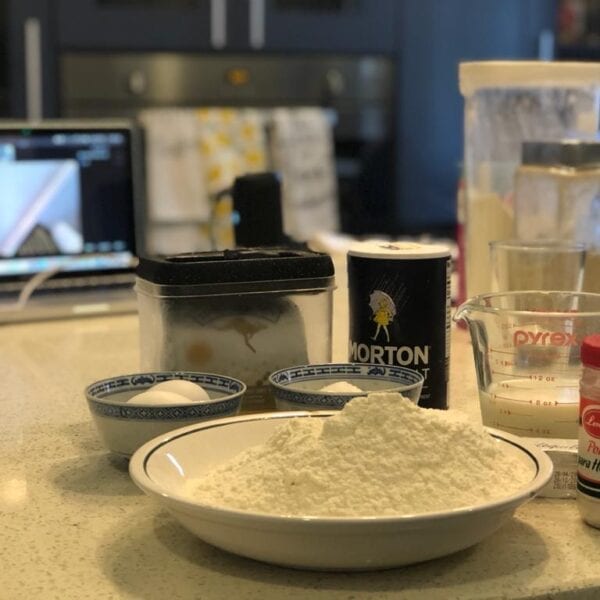
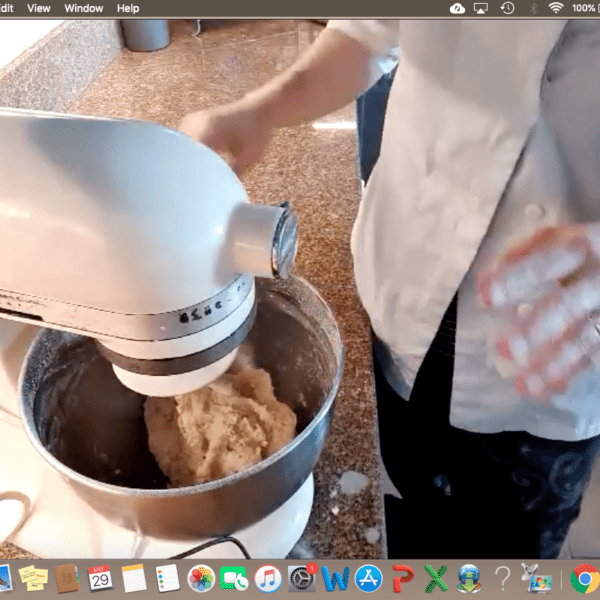
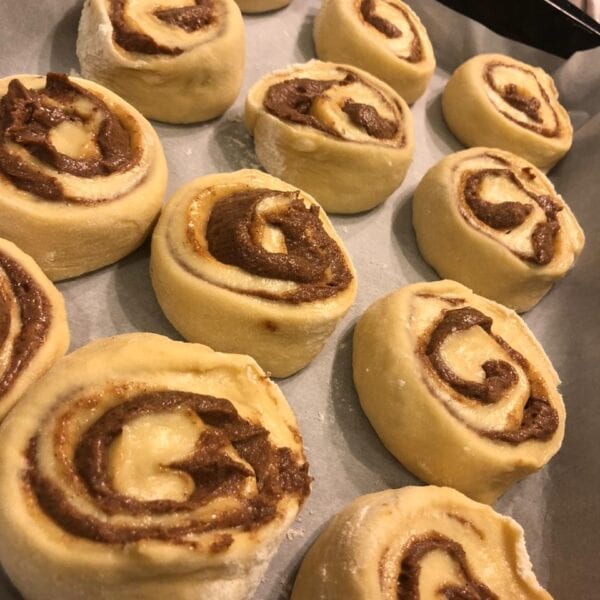
Una clase nueva se agregó a las electivas del colegio: Teens can Cook. Y estos alumnos el pasado ciclo tuvieron una Masterclass con la Chef Lily Fuji, quien compartió su receta de Rollos de Canela y aquí la dejamos para quienes se quieran unir a estos retos culinarios.

Masa:
455 grs harina de pan (3 1/2 tazas aprox)
100 grs azucar (1/2 taza)
6 grs sal (1 cucharadita)
8 grs Levadura instantanea (2 cucharaditas)
10 grs polvo de hornear (2 cucharaditas)
2 huevos
225 grs leche (1 taza menos una cucharada)
56 grs mantequilla (4 cucharadas o 1/4 taza)
Mezcle todos los ingredientes secos. Mezclen todos huevos y la leche ya agregue a lo seco. Amase hasta formar una masa elástica. Agregue la mantequilla y amasa un poco mas hasta que se haya incorporado. Fermente una hora y medía en un bol tapado y lo puedes guardar bien tapado en la nevera para armarlo cuando desee.
Relleno:
85 grs mantequilla (6 cucharadas) blandita
200 grs azucar morena ( 1 taza)
2 cucharadas de canela molida
1 cucharada de leche
Mezcla todos los ingredientes hasta formar una pasta
Frosting:
115 grs cream cheese (4 oz, media barrita de Philadelphia)
85 grs mantequilla (1/3 taza)
230 grs azucar en polvo (como 2 tazas)
1 cucharadita vainilla
2 cucharadas de leche
Bate todo bien hasta que esté una mezcla cremosa. Use sobre los rollos calientes
Ensamblado final
Estire la masa fermentado fino hasta que se forme un rectángulo de 18″de ancho y 12 de alto. Unte el relleno por toda la masa pero dejando como 1″ del borde de abajo sin relleno. Enrolle desde arriba hasta abajo apretando bien, moje el borde sin relleno con agua y selle. Corte 12 rodajas de 1.5 pulgadas y coloque en una bandeja engrasada y Fermente de una hora a una hora y media o hasta que estén bien hinchaditos. Caliente el horno a 350 grados Farenheit y hornee aprox 20 minutos o hasta que estén ligeramente dorados, solo ligeramente. Saqué del horno, deje reposar 10 minutos y proceda a glasear. ¡Ricura total!
Receta de Chef Lily Fuji.
@chef_lilli y @lillird





[/vc_column_text][us_separator][/vc_column][/vc_row]
Tags: cooking, electives, High School, Teens can cook[vc_row width=”full”][vc_column][vc_column_text] (more…)
Tags: assessment, Elementary, Grading, High School, Middle School, Standards-based grading[vc_row][vc_column][vc_column_text]Your appointment for our Student Parent Teacher Conference on Wednesday April 22nd, 2020 (Grades 7th-12th) and Thursday April 23rd, 2020 (Grades PK-6th) needs to be scheduled.
Please communicate your availability to virtually attend this conference by filling this form by Friday April 17th (Allow for three possible time slots). You will receive an e-mail with the Appointment confirmation once the department coordinates the schedule.
We remind you that the students from 3rd to 12th grades must be present with their parents during the conference on the corresponding day. Thank you for all your support.
Note: First Grade parents will follow as teachers have instructed.[/vc_column_text][us_separator size=”custom” height=”40px” show_line=”1″][vc_column_text]Su cita para la reunión de padres y entrega de evaluaciones el miércoles 22 de abril (7mo a 12mo) y jueves 23 de abril (Pre-Kinder a 6to) debe ser programada.
Solicitamos que nos provean con tres alternativas de disponibilidad de tiempo en el que puede conectarse virtualmente a esta conferencia llenando este formulario a más tardar el viernes 17 de abril. Recibirá un correo electrónico con la confirmación de la cita al recibir y procesar su petición.
Le recordamos que los estudiantes de 3ro a 12vo grados deben estar con sus padres durante el encuentro virtual. Gracias por su acostumbrado apoyo
Nota: Primer grado procederá según instrucciones de las profesoras.[/vc_column_text][us_separator size=”custom” height=”40px” show_line=”1″][gravityform id=”5″ title=”false” description=”false” ajax=”true”][/vc_column][/vc_row]
Tags: Elementary, High School, Middle School, Preschool